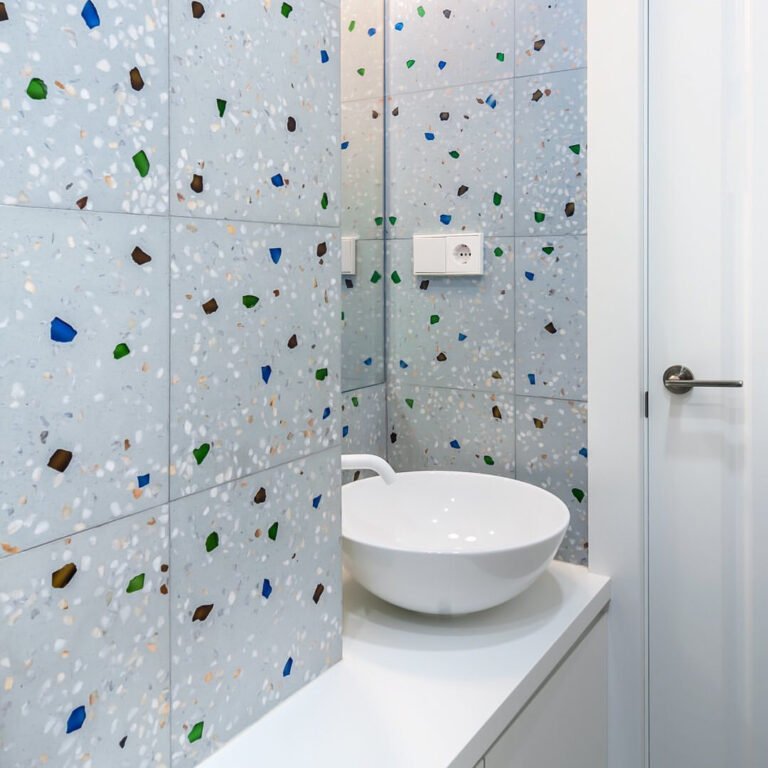

Terrazzo has traveled from 15th-century Venice to the present day, and its core logic remains unchanged: embed stone chips into a binder, grind them flat, and polish the surface into something durable and beautiful. But exactly which stones are embedded, what binder is used, and how the chips are arranged determines whether the final product is plain or stunning. A recent offering from yuanshen terrazzo, a distinctive marblechips terrazzo, makes a memorable statement within this classic framework.


The body of this product is a warm beige, pressed from inorganic cement blended with natural mineral powder. The tone is close to sun-dried clay or aged cotton—neither cool nor hot, laying down a grounded foundation for any space. What truly sets it apart from ordinary terrazzo is the dense scattering of red natural marble aggregate embedded within the base. These chips are strictly graded between 0.5 and 1 cm, uniform in size and densely packed, resembling plump red beans settled in rice paste or pottery shards revealed in a rammed-earth wall. Each marble fragment retains the angular, rough edges of natural fracture, creating a tactile contrast between the hard stone and the fine cement paste surrounding it.
From a materials science perspective, this is a classic inorganic cement-based terrazzo. According to industry technical references, traditional cement terrazzo formulations can accommodate stone chips up to 40 mm, with aggregate content reaching as high as 93%. The 0.5 to 1 cm red marble chips selected for this marblechips terrazzo fall within the ideal size range that a cement matrix can lock securely—large enough to deliver visual impact, yet small enough to ensure strong bonding and a level surface. Cement, as the traditional binder, gives the finished product high density and low water absorption. Within EU technical standards and industry norms, cement-based terrazzo remains the most clearly defined and widely applied system.
In residential interiors, this marblechips terrazzo performs exceptionally well. Used for living-room floors, the beige base keeps the space feeling bright and warm, while the red chips act as scattered accents that break monotony without creating noise. In an entryway, it delivers an earthy, grounded impression from the first step inside. Because it is an inorganic formula free of synthetic resin, it achieves a Class A fire rating, so homeowners need not worry about harmful emissions from underfloor heating. A factory-applied surface sealer prevents daily dust and stains from penetrating, making it family-friendly—spilled drinks wipe away with a damp cloth. Its hardness withstands furniture movement and daily foot traffic, and with normal care, it can last for decades.

In restaurants and commercial dining spaces, the advantages of this Marblechips terrazzo become even more pronounced. The food-service industry demands floors that are oil-resistant, abrasion-resistant, easy to clean, and visually compelling. Cement-based terrazzo offers excellent stain resistance and naturally slip-resistant texture, while the visual rhythm of the red aggregate gives diners a memorable environment. For a farm-to-table Western restaurant or an intimate Japanese eatery, the earthy tones of this floor enter a natural material dialogue with wooden furniture and linen tablecloths. In cafés or bakeries, the warm beige and vivid red grains echo the tones of bread and coffee, creating an atmosphere that feels inherently cohesive. From bar fronts and booth partitions to lobby floors and stair treads, this material handles a wide range of applications.
From a sustainability standpoint, marblechips terrazzo also holds its ground. The marble aggregate is salvaged from natural stone processing offcuts, representing resource reuse. The cement matrix releases no volatile organic compounds, contributing to healthier indoor air. And terrazzo’s industry-recognized longevity—with proper maintenance, floors can exceed 75 years of service—means it does not become construction waste on a regular replacement cycle. Compared to flooring materials that need frequent renewal, its lifetime environmental footprint is significantly lower.

Installation follows standard stone procedures. The slabs can be cut and drilled like conventional stone, set with ordinary cement mortar wet-lay methods without special techniques or additional crew training. For richer visual effects, the aggregate density can be adjusted, or different sizes of red chips can be blended to create custom variations. Daily maintenance requires only neutral pH cleaner and a damp mop.
In summary, this custom marblechips terrazzo from yuanshen terrazzo uses a beige inorganic base to support densely packed red marble aggregate, finding a balance between warmth and visual strength. It suits homes that want character and temperature, as well as dining venues that need durability and personality. For project teams seeking a surface that is classic yet never ordinary, this is a choice worth serious consideration.
If you are looking for inspiration for interior design materials, consider trying terrazzo. You can contact us to learn more about customized terrazzo, or order a terrazzo sample to add more diverse, vibrant, and eco-friendly elements to your home.