
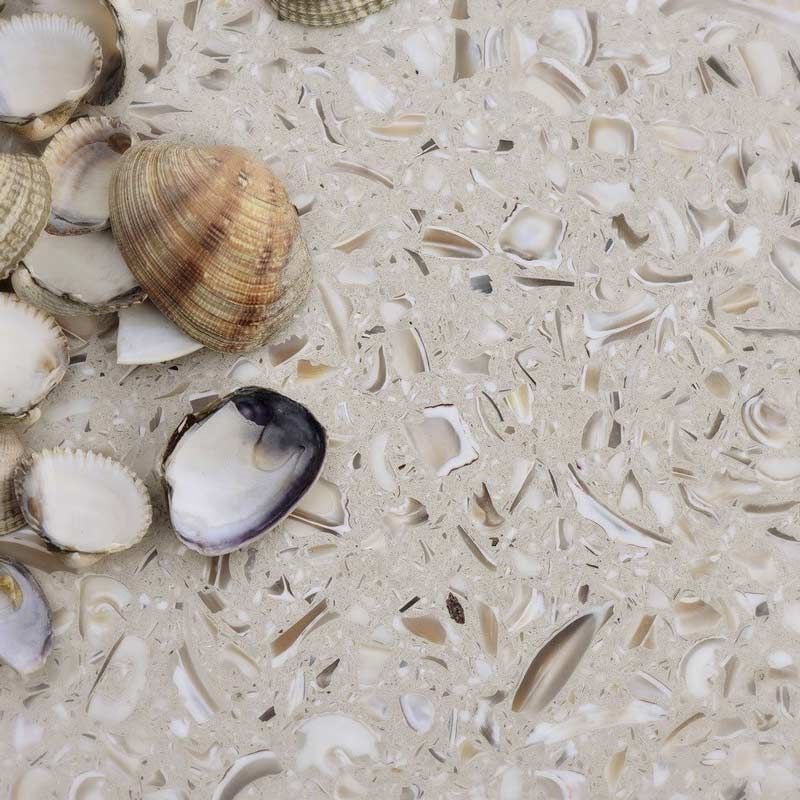
Every year, millions of tons of seashell waste come from global seafood industries. Oyster shells, clam shells, scallop shells, and mussel shells often end up in landfills or coastal dumping zones, creating environmental challenges such as odor pollution, soil alkalinity, and marine ecosystem imbalance [1]. However, through innovative material engineering, marine shells now gain new life as sustainable architectural surfaces — especially in the form of seashell terrazzo.
By transforming discarded shells into high-performance terrazzo products, manufacturers not only reduce environmental burden but also introduce a beautiful, eco-conscious design solution that bridges nature and architecture.
The Environmental Challenge of Seashell Waste
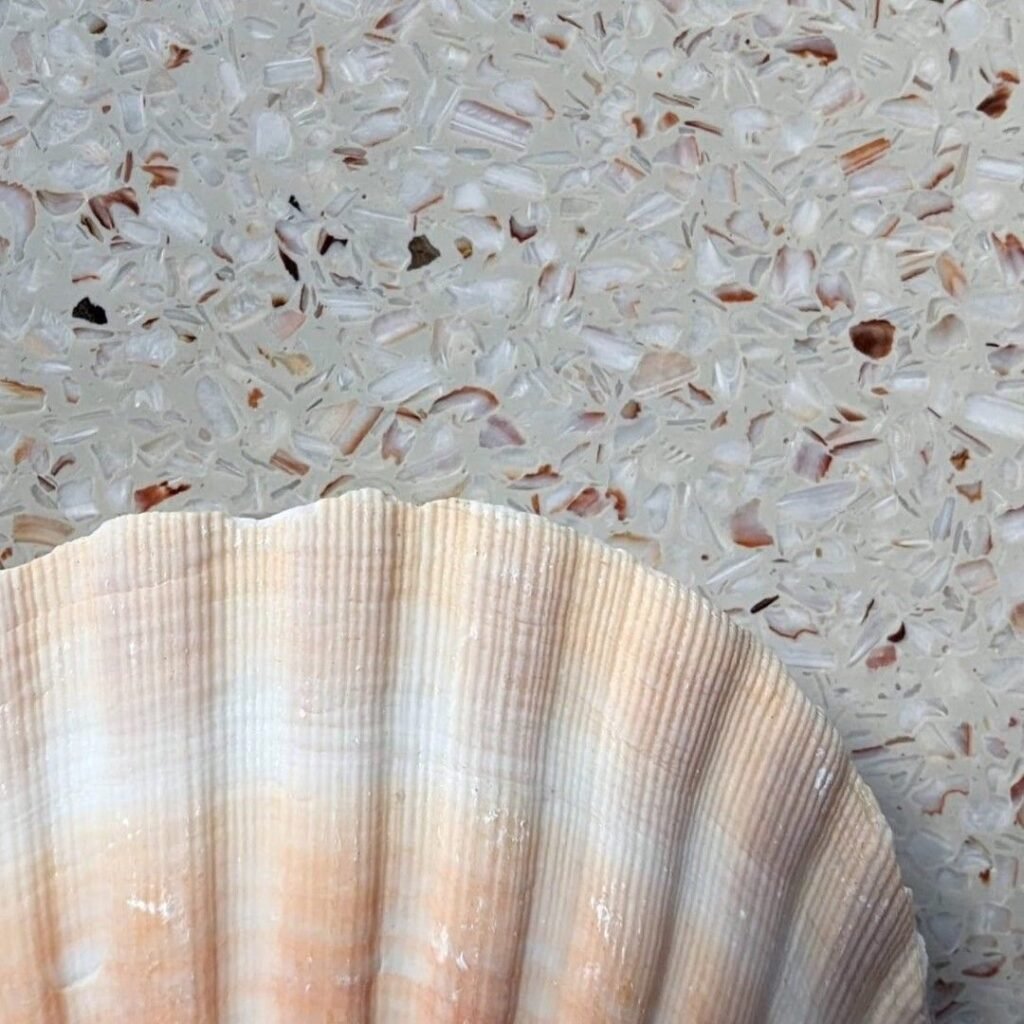
Marine shells primarily consist of calcium carbonate (CaCO₃), a mineral that forms through biological processes in marine organisms. While chemically valuable, shell waste often creates disposal problems due to its volume, odor, and slow natural degradation rate [2].
Traditional disposal methods, including landfilling and coastal dumping, can cause:
- Soil alkalization
- Water contamination
- Harm to marine biodiversity
- Increased greenhouse gas emissions
Researchers increasingly emphasize the urgent need for circular utilization of shell waste to mitigate these ecological risks [3]. Recycling shells into building materials offers a highly efficient solution.
Why Seashells Are Ideal for Terrazzo Production
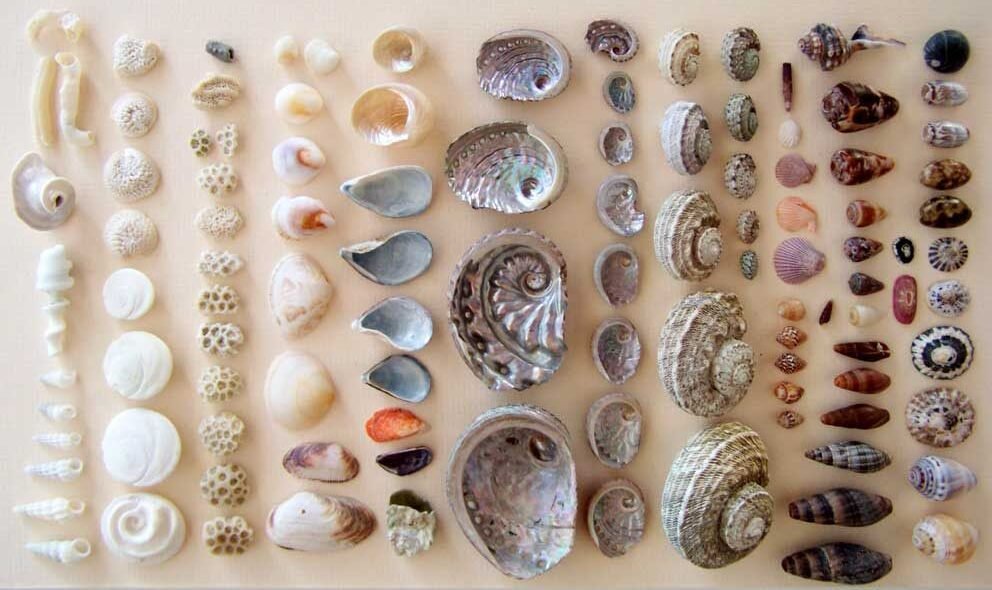
Seashells possess excellent physical and chemical properties that make them ideal terrazzo aggregates. Their crystalline calcium carbonate structure provides:
- High compressive strength
- Natural light reflectivity
- Unique organic texture
- Stable mineral composition
Studies confirm that crushed seashell aggregates can significantly improve the mechanical performance and durability of cement-based composites [4]. These characteristics allow shells to function both as a decorative element and a functional reinforcement material.
Additionally, shells introduce natural irregularity and iridescent highlights, creating terrazzo surfaces with exceptional depth and visual richness.
The Process: Turning Shell Waste into Terrazzo Art
The transformation from marine waste to architectural surface involves multiple carefully controlled steps:
- Collection and Sorting
Recyclers gather oyster shells and other marine shells from seafood processing plants and restaurants. - Cleaning and Sterilization
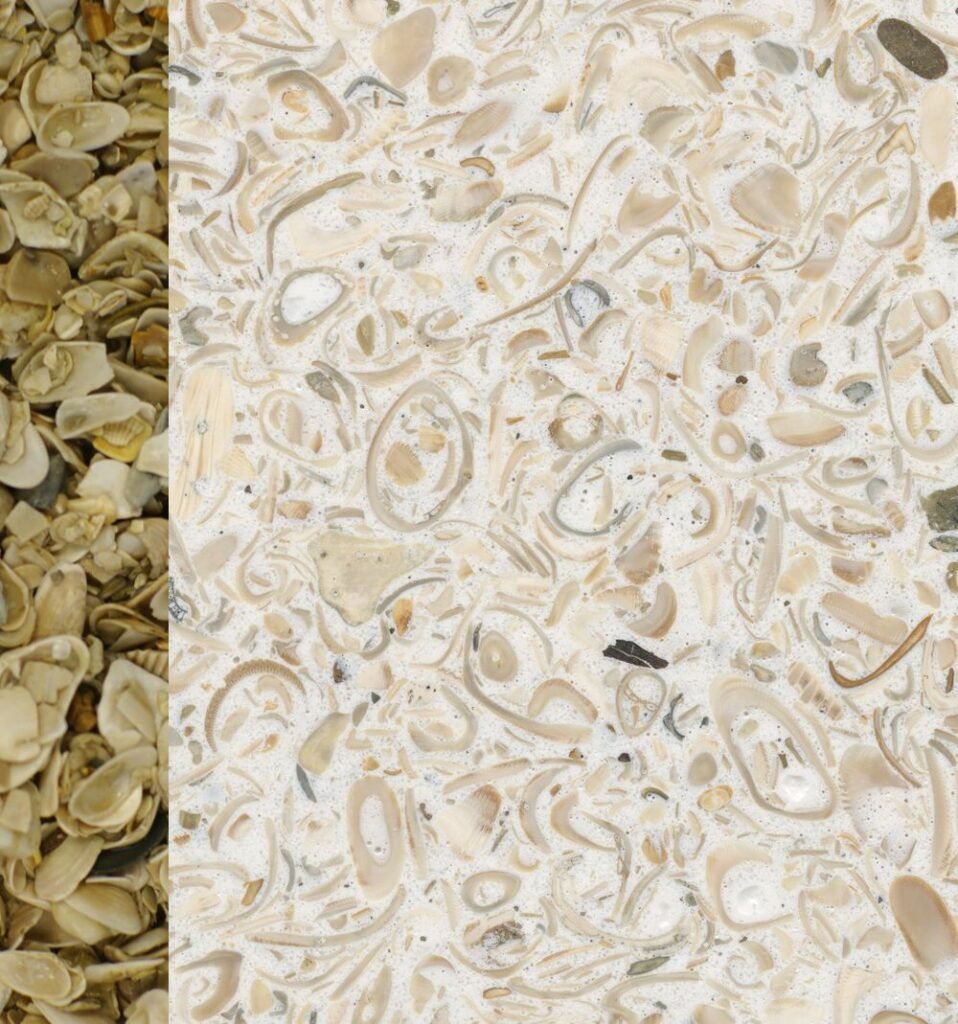
Advanced washing and heat treatments remove organic residue, odors, and bacteria. - Crushing and Grading
Machines crush shells into controlled particle sizes, allowing designers to select textures from fine to coarse. - Terrazzo Blending and Casting
Shell particles blend into a high-performance cement or resin matrix. - Grinding and Polishing
Precision polishing reveals shell textures and luminous surfaces.
This controlled process ensures both structural stability and visual refinement, resulting in terrazzo products suitable for high-end architectural applications [5].
Aesthetic Value: Nature Embedded in Design
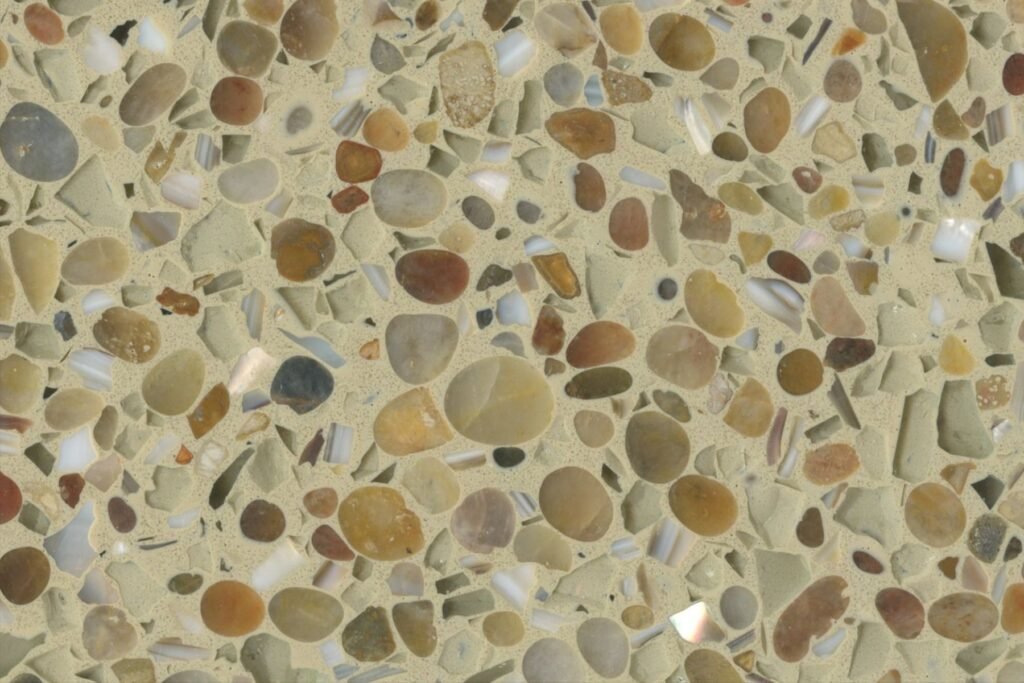
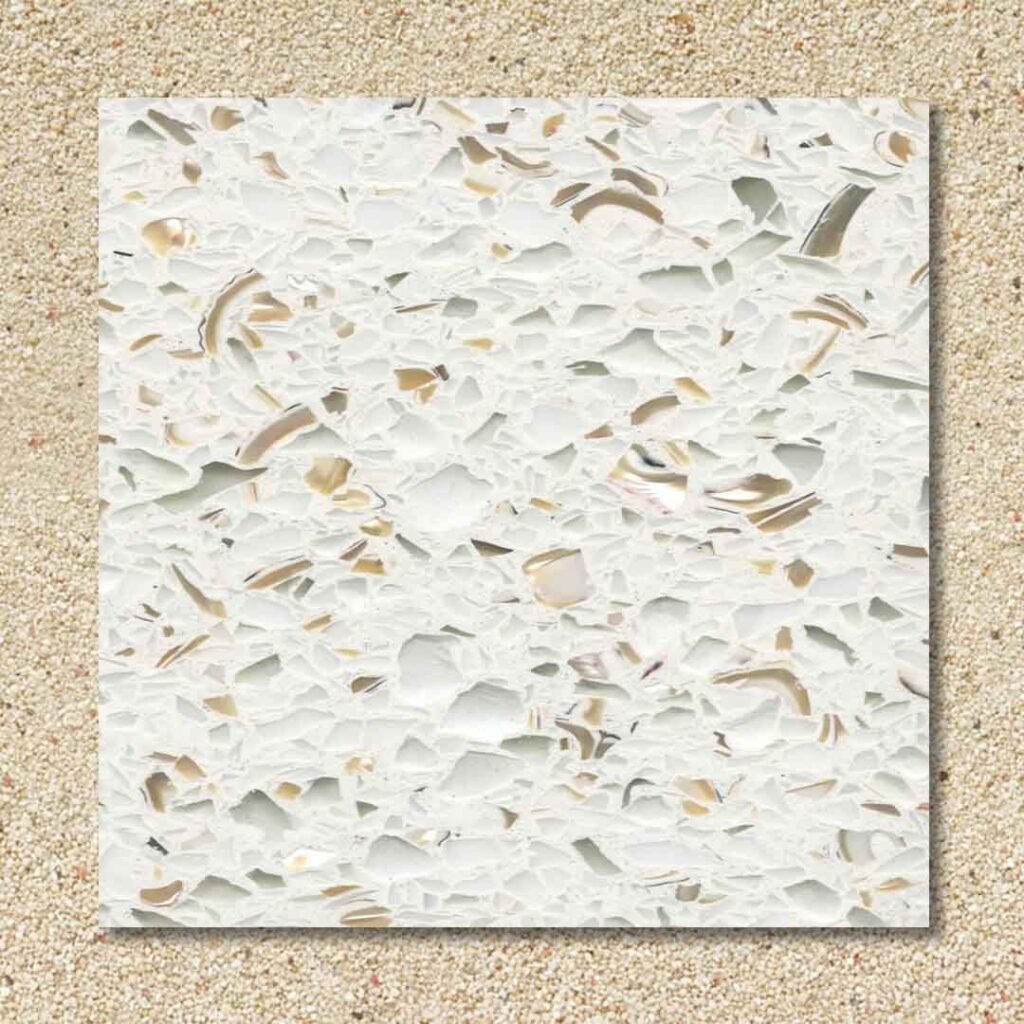
Seashell terrazzo stands out for its organic visual character. Unlike synthetic aggregates, natural shells introduce subtle variations in tone, shape, and reflectivity. These micro-differences create:
- Soft pearlescent glow
- Natural layered textures
- Elegant surface depth
Under changing light, shell terrazzo reflects warmth and movement, giving interiors a dynamic yet calming atmosphere. Designers increasingly favor seashell terrazzo in luxury hotels, galleries, restaurants, and residential spaces for its ability to connect architecture with nature.
This fusion of marine beauty and architectural precision transforms ordinary surfaces into expressive design statements.
Structural Performance and Durability
Beyond beauty, seashell terrazzo delivers outstanding performance. Laboratory tests confirm that processed shell aggregates can enhance compressive strength, abrasion resistance, and durability when properly integrated into terrazzo matrices [6].
Seashell terrazzo offers:
- Excellent wear resistance
- Low water absorption
- Long service life
- High structural integrity
These properties make it ideal for high-traffic environments such as hotel lobbies, shopping malls, office buildings, and residential flooring.
Sustainability: A Circular Economy Solution
Recycling marine shells aligns directly with global sustainability goals. By converting biological waste into architectural material, manufacturers reduce landfill dependency, minimize environmental pollution, and lower raw material extraction demands.
According to circular economy research, material reuse in construction significantly lowers carbon emissions and energy consumption compared to conventional mining and quarrying [7].
Seashell terrazzo therefore contributes to:
- Reduced carbon footprint
- Waste volume reduction
- Marine ecosystem protection
- Sustainable urban development
It exemplifies how green material innovation can serve both environmental responsibility and architectural excellence.
Applications in Modern Architecture
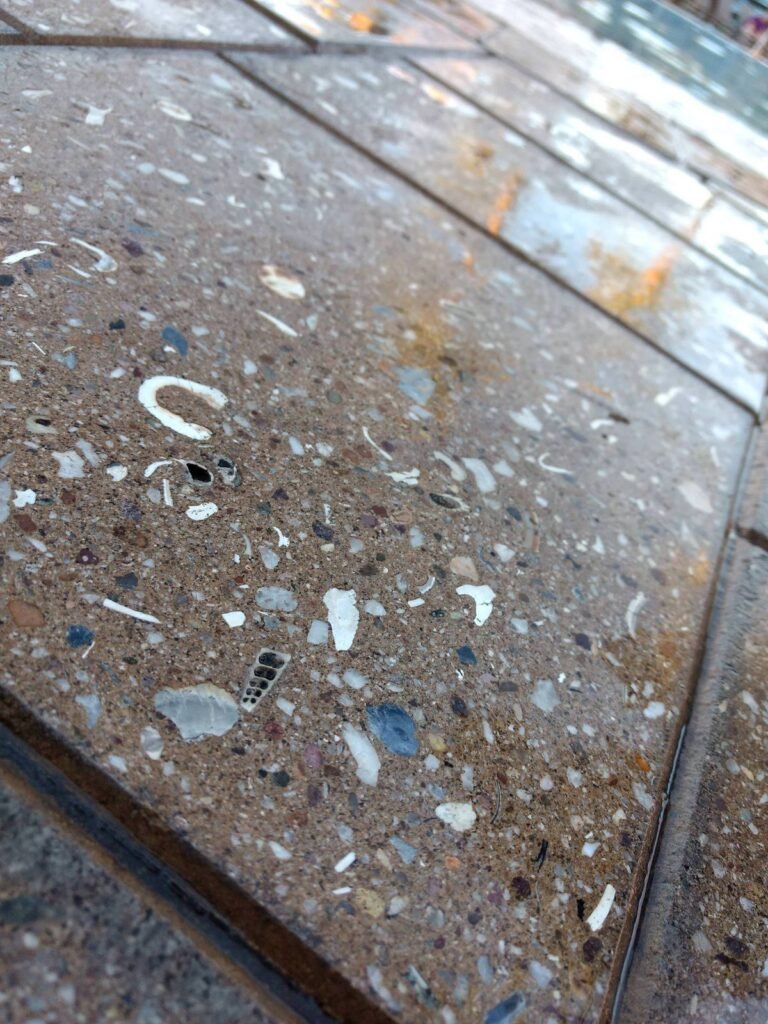
Seashell terrazzo adapts to a wide range of interior and exterior design applications, including:
- Flooring
- Wall cladding
- Countertops
- Staircases
- Furniture surfaces
- Decorative panels
Its neutral yet expressive character allows seamless integration into minimalist, luxury, coastal, and contemporary interior styles. Designers increasingly specify seashell terrazzo to communicate ecological awareness while delivering premium aesthetic impact.
A Material That Tells a Story
More than just a surface, seashell terrazzo tells a story of transformation — from ocean waste to architectural art. It reflects humanity’s evolving relationship with nature, where sustainability and design no longer conflict but collaborate.
As material science advances, recycled marine shell terrazzo continues to expand its technical and artistic possibilities, offering designers a powerful medium for creative expression and environmental advocacy.
References
[1] FAO – Global Shellfish Production and Waste Management
https://www.fao.org
[2] Journal of Environmental Management – Marine Shell Waste Disposal Impacts
[3] ScienceDirect – Circular Economy Strategies in Marine Biomass Recycling
[4] Construction and Building Materials Journal – Performance of Oyster Shell Aggregates in Cement Composites
[5] Materials Today – Sustainable Terrazzo Manufacturing Techniques
[6] Journal of Cleaner Production – Mechanical Properties of Recycled Shell-Based Building Materials
[7] Ellen MacArthur Foundation – Circular Economy in Construction


