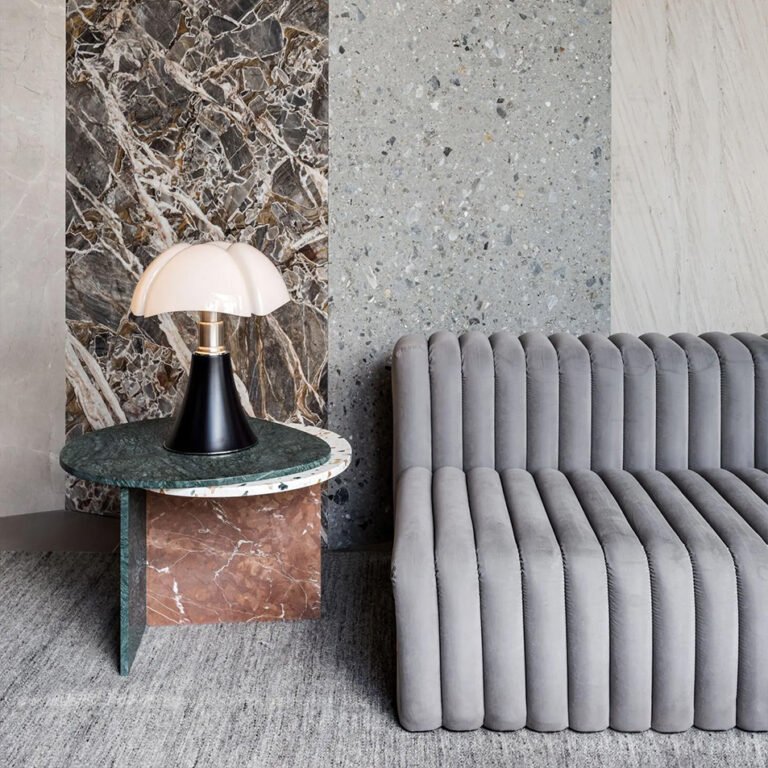

Hexagonal tiles have been making a quiet comeback in interior design, moving from Nordic-inspired homes to minimalist Japanese spaces with ease. But the latest offering from yuanshen terrazzo is not your typical solid-color hexagon. This hexagonal terrazzo tile locks the unpredictable beauty of natural marble inside a precise six-sided frame, turning the floor into a natural mosaic that is both orderly and free.


The body of the hexagonal terrazzo tile is an off-white tone, close to the soft hue of handmade rice paper or unglazed pottery. It does not demand attention, yet it lifts the brightness of a room, making it especially suitable for apartments with modest natural light. What truly brings the surface to life is the aggregate suspended within that pale matrix: fragments of green marble from Italy and recycled beige marble from Turkey.
The Italian green marble chips carry a subdued color, like moss growing on the shaded side of a mountain or olive leaves after rain, scattered sparingly across the off-white ground. The recycled Turkish beige marble pieces are warmer, closer to the tone of baked almonds, blending naturally with the base without jarring contrast. Both materials are salvaged from natural stone offcuts, cleaned, crushed, and graded before finding their second life. Because no two stone fragments share the same veining, color saturation, or roughness, every single tile is genuinely one of a kind.
The hexagon itself is a compelling shape. With two more corners than a square, it creates a honeycomb continuity when laid, offering more visual flow than conventional rectangular formats. In this design, yuanshen terrazzo places the geometric discipline of the hexagon against the random textures of natural marble—the six edges are human precision, while the green and yellow within are nature’s improvisation. This tension gives the floor a designed feel without tipping into industrial coldness.
In residential settings, the terrazzo tile adapts to multiple rooms. Used in an entryway, the six-sided outline sets the tone the moment one steps inside. The off-white body makes a compact foyer feel open, while the green and beige aggregates introduce a hint of organic vitality. In the kitchen, the inorganic cement-based body is hard enough to withstand the occasional dropped pot and years of daily foot traffic. Its sealed surface resists oil penetration, so cleanup is as simple as a quick mop. Extended into the living room, the warm beige and subtle green tones harmonize with oak furniture and linen textiles, creating a calm, textured domestic atmosphere. Even in bathrooms, the varied joint lines of hexagonal layouts add visual interest to otherwise functional spaces, while the natural marble textures lend an unexpected layer of refinement.

In restaurants and commercial interiors, the advantages of the hexagonal terrazzo tile become even clearer. For a farm-to-table bistro or an intimate Japanese restaurant, the story embedded in the floor matters. The recycled Italian green and Turkish beige marble fragments carry a narrative of regeneration—stone that might have been discarded now becomes part of the customer’s surroundings. The off-white base keeps the dining room feeling clean and bright, while the natural aggregate textures prevent the space from feeling over-designed. In open-plan dining areas, the hexagonal pattern guides the eye across long, narrow rooms, breaking visual monotony. In a café or bakery, the warm beige chips echo the tones of bread and wooden tables, creating an atmosphere that feels inherently cohesive.

From a performance standpoint, the inorganic terrazzo formula gives this terrazzo tile the reliability that cement-based materials are known for. It is moisture-resistant, carries a high fire rating, and will not warp under underfloor heating cycles. Daily maintenance requires no special treatment; a neutral pH cleaner and a mop are sufficient. For homeowners, this means beauty and convenience coexist. For restaurant operators, it means one less concern during the dinner rush. (Michigan State University. “TERRAZZO FLOORING Construction Standards)
Yuanshen terrazzo has taken recycled natural marble fragments, set them into an off-white inorganic base, and cast the mixture into a six-sided mold to create a surface that is as sustainable as it is attractive. Unlike mass-produced ceramic tiles that look identical by the thousand, it offers genuine variation. Unlike large natural stone slabs that are expensive and demanding to maintain, it is practical and accessible. When laid, the floor becomes a complete picture composed of countless small, unique natural paintings.
For anyone seeking a distinctive touch at home or in a dining venue without overwhelming the space, this hexagonal terrazzo tile strikes the right balance. It is restrained enough to serve as a background, yet rich enough to reward a second glance. Whether under a kitchen table or across a restaurant floor, it brings the irregular beauty of quarried stone into a shape that geometry made civilized.
For designers and homeowners exploring materials that bridge the gap between raw nature and refined interiors, this hexagonal terrazzo tile offers a compelling answer. The six sides provide structure; the marble fragments provide soul. Together, they create a floor that feels designed yet lived-in, precise yet organic—a rare combination in any space.
If you are looking for inspiration for interior design materials, consider trying terrazzo. You can contact us to learn more about customized terrazzo, or order a terrazzo sample to add more diverse, vibrant, and eco-friendly elements to your home.